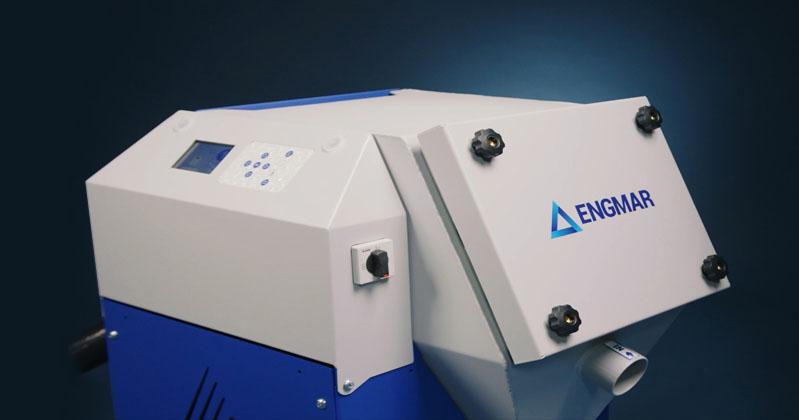

In a welding plant, ventilation is essential in ensuring operators’ safety and protecting their health. Here are the 3 main principles of ventilation :
- The extraction of fumes and gases: the welding process emits potentially harmful fumes and gases, which ventilation helps extract, preventing operators from inhaling them.
- Fresh air supply: replacing contaminated air with fresh air is crucial in order to maintain high air quality.
- Temperature control: ventilation also helps regulate temperature in the factory plant, making the work environment more comfortable.
According to these three principles, there are 2 main types of ventilation.
"Local" ventilation, also known as extraction at source
Pollutants are extracted as close as possible to their emission source by extraction devices (local ventilation).
Benefits are:
- Extract fumes as close as possible to their source of emission, before they reach the operators’ breathing zone.
- Prevents the dispersion of fumes throughout the entire workplace atmosphere and keeps toxic substances confined to a small volume of air. This allows for pollutants to be extracted rather than dispersed into the ambiant air.
- Lowers the costs of investment, operating and heating due to requirements in terms of air supply being considerably lower than those of general ventilation systems (ventilation by dilution).
- Extracts fumes more efficiently, leading to lower exposure levels for operators, in compliance with exposure limits (occupational exposure limits (OELs) refer to the maximum amount of harmful substances a welder can be exposed to without putting their health at risk).
General ventilation
Purifies the air using extraction fans, and complements extraction -at-source systems (local ventilation) though by itself it is not a solution. The differences between the two solutions highlight how they complete each other.
Features are:
- Dilutes pollutants using a supply of fresh air into the work area, which lowers the amount of harmful particles in the ambiant air to the lowest concentration possible.
- HOWEVER, it does not completely remove pollutants from the workplace atmosphere, meaning a certain level of residual pollution is to be expected even after extraction.
- Brings fresh air into the workplace and dilutes particles emitted by extraction-at-source.
- Significant investment, operating and heating costs, especially if no other solution is used.
Summary table of ventilation types
| Local ventilation: extraction at source | General ventilation | |
|---|---|---|
| How it works | Extracts the fumes as close as possible to their source of emission, before they reach the operators’ breathing zone. | Dilutes the pollutants by supplying fresh air into the work area, and reduces their concentration in the ambient air to the lowest possible level. |
| Efficiency | Extracts harmful particles as close as possible to their source of emission. | Dilution and dispersion of particles by a supply of fresh air. |
| Extraction flows | Low volume of air extracted. | Movement of large volumes of air. |
| Initial investment cost | Optimized | Important |
| Operating cost | Optimized | Important |
| Protection of workers | Optimized | Low, possibility of previously unexposed operators becoming exposed. |
What solution should you choose?
Extraction at source must remain the preferred option in all cases, especially those where toxic substances are emitted in large quantities. General ventilation must be used as a main air-purifying solution only if local ventilation (extraction at source) is technically impossible.
In general, it is necessary to compensate the flow of polluted air by a flow of fresh air (or partially recycled air from another area which generates pollution of the same nature, after purification for areas with specific pollution). The release of the contaminated air outside the workplace also requires an in-depth study of the building’s overall configuration and surroundings in order to prevent the unintended recirculation of pollutants.

At ENGMAR, our teams offer solutions that are adapted to your protection needs and your workshop’s configuration. We draw up tailored technical files after studying your request in detail. If you wish to be assisted by our experts, feel free to contact us.
Other articles in the same category
How does the new european regulation strengthen welder protection?
To enhance welder safety and reduce risks associated with exposure to hazardous substances, the Council of the European Union and the European Parliament have reached an agreement on the sixth revision of the directive on carcinogenic, mutagenic and reprotoxic substances (CMRD). This regulatory development confirms a clear trend: source capture and welding fume extraction are […]
Read the article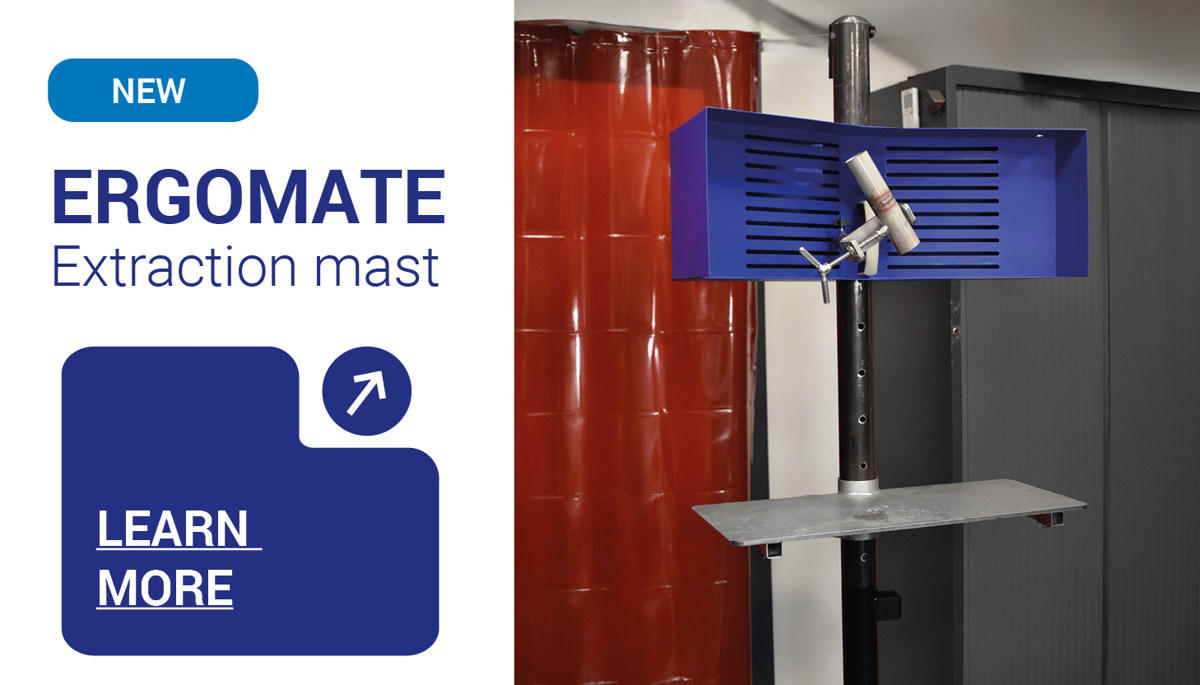
ERGOMATE Extraction mast: the innovative solution for welding training
The ERGOMATE suction mast combines a welding table with efficient fume capture to provide future welders with safe and ergonomic training conditions.
Read the article