


Extraction arms with hood
- Easy to install, however, they require frequent repositioning depending on the part being welded. They are generally the least effective solution for fume capture, as extraction is concentrated over a limited area.


Welding fume extraction is no longer optional. Welding fumes are now classified as carcinogenic to humans (IARC – Group 1).
For industrial companies, the question is no longer whether welding fumes should be extracted, but which welding fume extraction solution should be implemented to sustainably protect operators and remain compliant with regulations.
This guide provides a clear, concise, and practical overview of welding fume extraction solutions, with a focus on source capture, mobile welding fume extraction, and the most effective technologies on the market.
Each welding operation generates fumes composed of ultrafine metal particles and gases that are hazardous to health.
Depending on the processes, materials and filler metals used, welding fumes may contain:
Without welding fume extraction, these pollutants are released into the workshop’s ambient air and are inhaled by the workers.
Yes, welding fumes consist of extremely fine particles, capable of penetrating deep into the body.
Nanoparticles: distributed throughout the body via the bloodstream.
Alveolar fraction (A): penetrates the pulmonary alveoli.
Inhalable fraction (E): inhaled through the mouth and nose.
Short-term, acute risks: eyes and respiratory tract irritations, headaches, fatigue, metal fume fever, poisoning.
Long-terme, chronic risks: asthma, chronic lung diseases, pneumoconiosis, skin lesions and carcinogenic risks.
The closer fumes are captured to their point of emission, the more effective the protection in preventing these health risks.
The employer must implement all necessary measures to limit employees’ exposure to airborne pollutants.
The 6th revision of the CMR Directive (CMRD) has officially included welding fumes in Annex I. Welding is now recognized as an activity generating CMR substances (carcinogenic, mutagenic, and reprotoxic).
This notably implies:
Regularly updated risk assessments.
Priority given to source capture.
Regular inspection of welding fume extraction systems.
Traceability of exposure.
Technical standards, including DIN EN ISO 21904, define the requirements for the capture and filtration of welding fumes.
Not all air treatment solutions offer the same level of effectiveness. The further the extraction point is from the source, the more pollutants are diluted within the workshop.
Source capture provides:
Maximum protection for welders
An overall reduction in ambient pollution
Less contamination of equipment
Easier compliance with regulations

There are two main categories of welding fume extraction systems: low-vacuum and high-vacuum.
These solutions make it possible to capture fumes near the welding workstation, although still at some distance from the emission point. This configuration therefore requires a higher extraction airflow rate.
Extraction arms with hood

Extractions arms with laminar slit nozzle

Extraction tables

Extraction walls

Extraction masts
These solutions are recommended when source capture is not possible.

High-vacuum Laminar slit nozzle

MIG/MAG and TIG fume Extraction torches
These systems should be prioritized to ensure effective welding fume capture and optimal operator protection. It should be noted that fume extraction torches remain the most effective solution.
The fume extraction torch is now the benchmark for welding fume extraction. It captures fumes directly at the arc, before they can disperse into the surrounding air.
A fume extraction torch combines, within a single piece of equipment:
The extraction function is integrated into the torch itself. Fumes are captured as soon as they are generated, without altering the welder’s movements. Fume extraction torches are available for MIG/MAG and TIG processes.
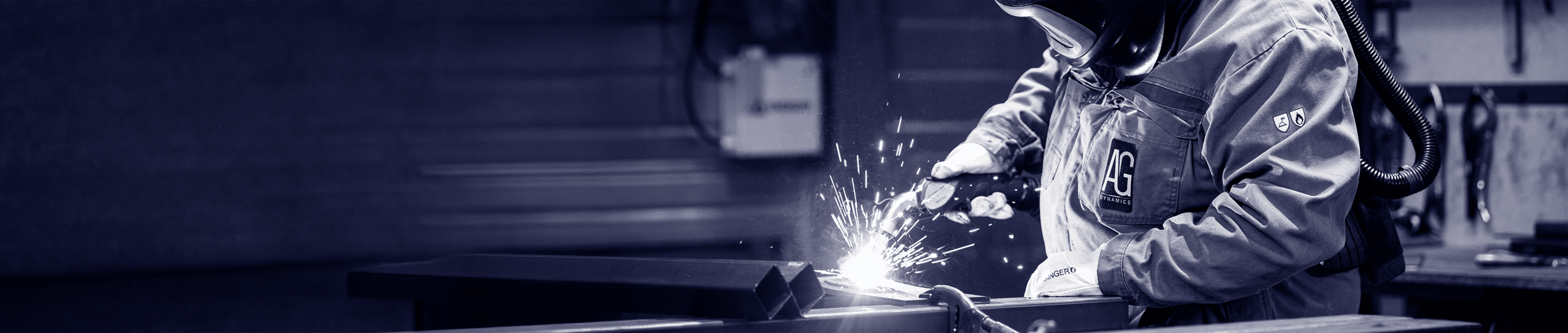
A mobile welding fumes extraction can move easily a welding fume extraction solution, particularly suitable in the following cases:
ENGMAR offers 2 types of mobile welding fume extraction solutions:

Low-vacuum mobile welding fume extraction

High-vacuum mobile solution
These mobile welding fume extraction solutions can capture fumes as close as possible to the workstation, while maintining a high level of flexibility. At ENGMAR, we recommend mobile welding fume extraction units equipped with fume extraction torches and balancers to ensure optimal fume capture and protect operators’ health.
The choice depends on several criteria:
The higher the emissions, the more essential source capture becomes.
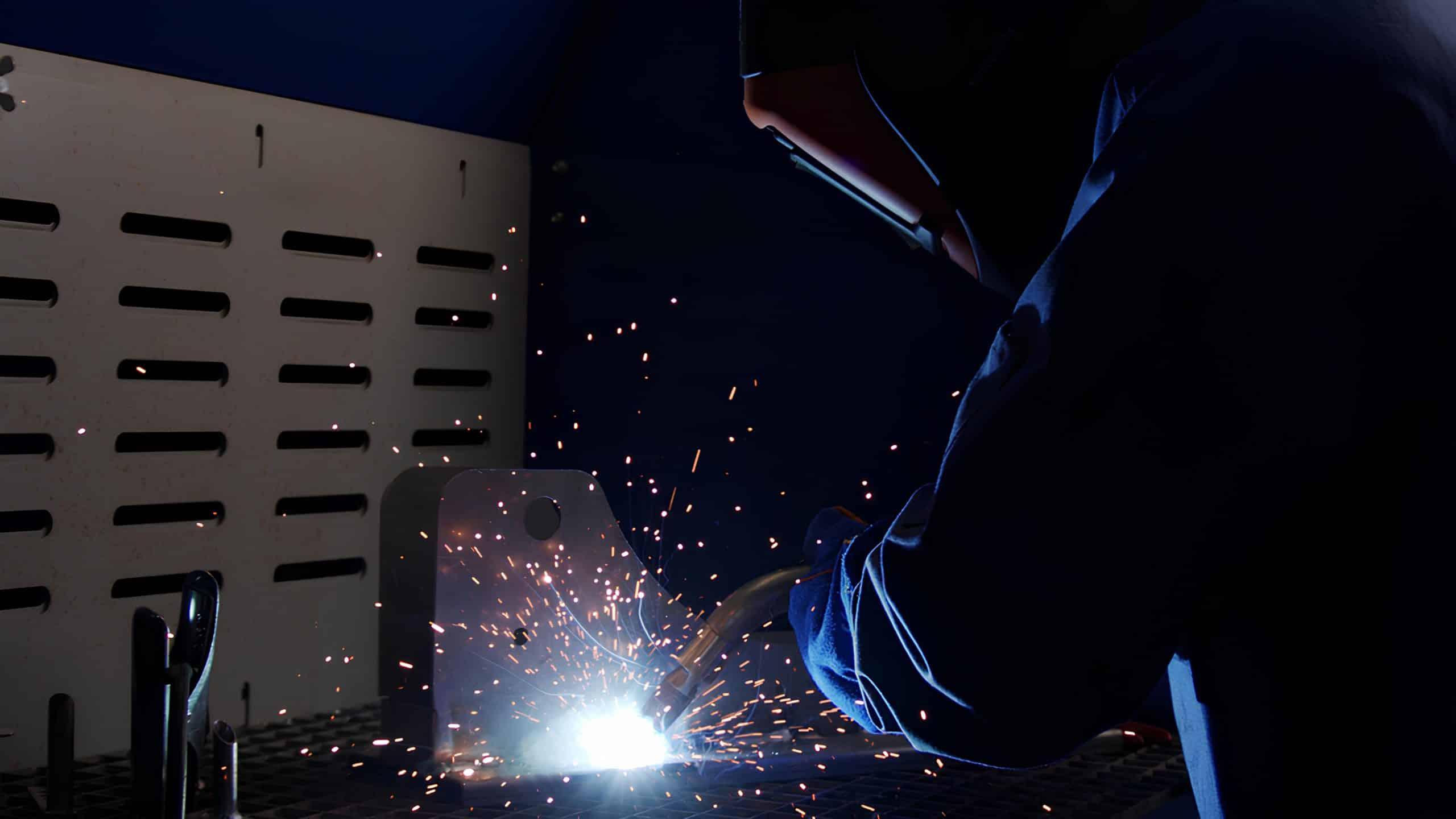
Expert in welding fumes extraction, ENGMAR supports industries in implementing high-performance, compliant solutions.
Our experts assist you with:
Request a personalised welding fume extraction assessment
Would you like to effectively extract welding fumes in your workshop?
ENGMAR carries out a personalized assessment to provide you with the solution best suited to your production environment.
